

ECE-commerce entrepreneurFrom sole trader to holding company
Convert a sole proprietorship into a BV
We guide the conversion of your sole proprietorship into a BV, from the tax choice and the contribution to setting up the new administration.

A conversion that works fiscally and practically
Converting a sole proprietorship into a BV means your business becomes a separate legal entity. In principle, your private assets are then separated from the risks of the business. Taxation changes as well: the BV pays corporate income tax and you receive a salary as director of your own BV. However, the timing and method of conversion determine whether tax is due on accumulated profits. Under certain conditions, a tax-free contribution (geruisloze inbreng) is tax neutral. We assess in advance whether the conversion suits your profit and plans. We then guide the contribution, the incorporation and the new administration.
- Assessment of profit and risk
- Tax-free contribution and incorporation
- Setting up salary and administration
- One point of contact after the conversion
From decision to a working BV
Tax calculation
We calculate what the BV yields after corporate income tax, salary and dividend, so your decision rests on figures.
Contribution and incorporation
We prepare the deed, the opening balance sheet and the contribution documents, and arrange registration with the Chamber of Commerce (KvK).
Salary and agreements with yourself
We also set an appropriate director's salary and put loans and the current account in writing in advance.
New administration
After the conversion, we take care of your BV's bookkeeping, VAT, annual accounts and corporate income tax.
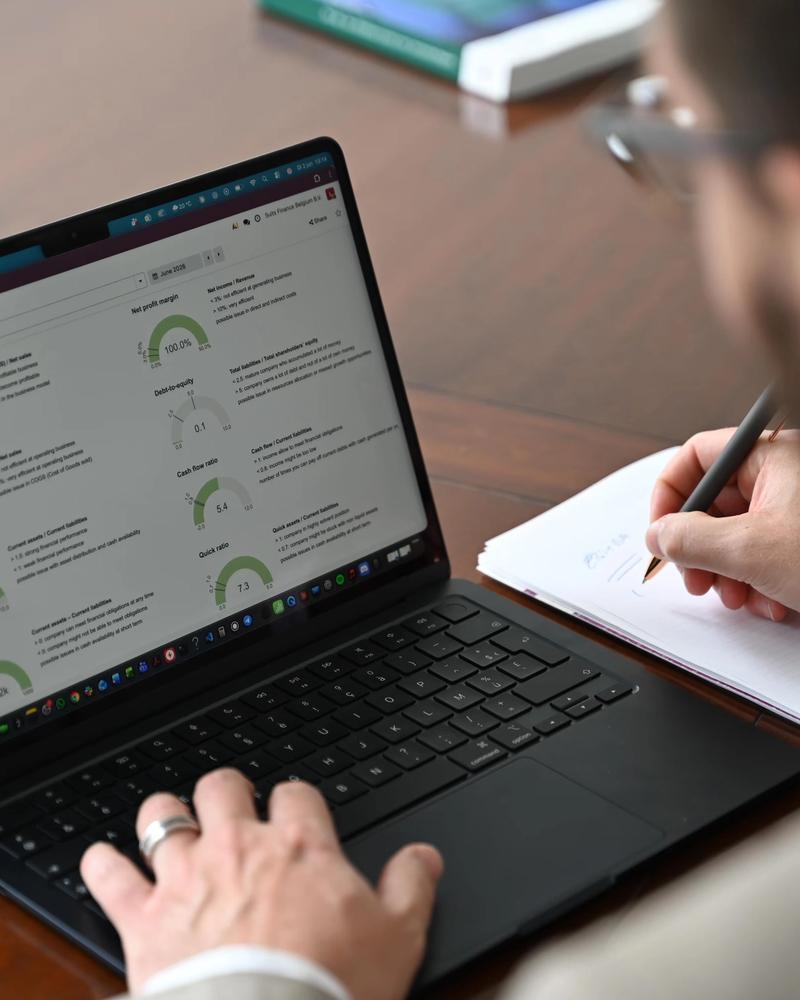
When does converting to a BV make sense?
A BV usually pays off once your profit is structurally higher than what you need privately. The surplus then stays in the business and is taxed at the corporate income tax rate. A BV also limits your liability, provided you carefully separate the business from your private expenses. A conversion does bring extra work, such as annual accounts, a salary for yourself and separate tax returns. In addition, the contribution is subject to conditions you need to check in advance. We make a comparison based on your figures, so you can choose without surprises.
No promises. Proof.
Real entrepreneurs. Real results. Discover how entrepreneurs like you grew with structure as their foundation.

AEEntrepreneur with a UAE FZCODubai structure, Belgian tax authorities

PPOnline brand with PayPal revenueFrozen revenue released

Support after the conversion
After the conversion, the real work of a BV begins. You deal with annual accounts, a filing obligation with the Chamber of Commerce and separate returns for corporate income tax and VAT. You also need to strictly separate private and business finances, because mixing them can undermine the liability protection. We set out these agreements in a clear way of working and monitor the deadlines. Every year, we also discuss whether the salary and dividend still match the profit. That way, the BV keeps doing what you expected of it.
Questions? We'll answer them.
There are two common routes. With a tax-free contribution, you contribute the business to the BV at book value, provided the conditions of the Dutch Income Tax Act are met. As a result, there is no immediate settlement of tax on hidden reserves and goodwill. With a contribution at fair value, or a sale to your own BV, tax is settled on the profit realised. The administrative handling also differs, such as the transfer of contracts, stock and VAT. We assess in advance which route suits your financial position, the assets involved and the desired moment of conversion, and record the choice in writing.
A tax-free contribution is subject to conditions under the Dutch Income Tax Act. The entrepreneur contributes the business, or an independent part of it, and receives shares in the BV in return. The assets must also be transferred at book value, and the contribution must be recorded in a notarial deed. There are also requirements for timely notification to the Dutch Tax and Customs Administration. A mistake in any of these elements can lead to tax on the accumulated profit. That is why we check the conditions in advance, coordinate the documents with the notary and monitor the deadlines, so the conversion goes ahead without an unexpected assessment.
As a director-major shareholder (DGA), you fall under the customary wage rule. Your salary must therefore be at least the highest of a fixed standard amount, 75 percent of the salary in the most comparable employment, and the highest salary of an employee of the BV. You can also pay out dividend, provided the BV can continue to pay its debts after the distribution. You pay box 2 tax on dividend, while salary falls in box 1. We calculate the balance based on your profit and private expenses, and record the choice in a board resolution and a payroll administration that holds up under audit.
Contracts, permits and bank accounts do not automatically transfer to the BV. On contribution, the BV takes over the agreements, for which some counterparties must give consent. Permits and registrations often need to be put in the BV's name again. For VAT, the BV receives its own VAT number, while the transfer of the business can, under conditions, remain outside the scope of VAT. Customers also need to know in time which company name and account number will appear on invoices. We draw up an overview of all ongoing obligations in advance and arrange the transfer in a fixed order, so your service to customers continues without interruption.
Your partner in this
Meet the specialists behind this solution; your direct contacts for strategic advice.

Etienne GrosveldPartner – Strategy Consultant